Not just another HODL article. The dangers of 24/7 prices and immediate liquidity for early stage crypto projects are more important to recognize now than ever before.
TL;DR: Unlike traditional startups, crypto projects have to begin worrying about their token price from day one. This creates a vicious cycle of FUD, dumping, and marketing holding back the space as a whole.
…
One of the biggest problems in the blockchain space right now: Crypto projects cannot always focus on long-term token value, utility, and development. Many news articles report drops in the price of Ethereum or new lows for the market in 2018. However, how many are discussing Cosmos’ mainnet launch or developments in SNARKs?
Why?
A majority of current crypto investors are inactive community members focused on short-term token prices.
Traditional startup founders invest what they can to begin building a company and then raise a seed round after pitching to dozens of established VCs or angels. This seed round may provide enough runway for the next 12–18 months (varies based on industry and company) where they may have to raise another round to fuel growth.
An important point: these startups do not have a 24/7 liquid token price to worry about. They can price their shares during annual or biannual rounds and ultimately list in the public market after years of experience and when ready.
They can operate in stealth mode, focus on building an MVP, garner customers, and receive feedback from their experienced investors. The ability to develop, test, and iterate without experiencing massive changes in protocol value is very important. When the company finally reaches a state of significant growth and market validation after a multi-year process, they can begin looking at exit opportunities through a sale to another company or an IPO.
Take Uber for example. The company was founded in 2009 and raised an angel round in Fall 2010 of $1.3 million. 8 years later, the company has seen tremendous demand for their service, expanded to new markets, and raised $22 billion from some of the top investors around the world. During Uber’s rocky experiences relating to the treatment of employees, clashes with local governments, and concerns about competition from Asian players, the board did not have to worry about the weekly or even monthly stock price of the company. This allowed the firm to take a long-term view of the company and worry less about the immediate financial implications stemming from a price plunge. Investors who invested in 2009–2013, for example, knew that they would have to stick with Uber for years of hard work, uncertainty, and development before a profitable exit would be possible. Now, as a more mature company, Uber is improving its internal processes and attempting to reposition its brand, all the while hiring and considering a potential IPO in 2019. If Uber released its own token in 2009 which may have plunged in value after profitability reports, would it have been able to focus on the long-term vision?
I understand that crypto projects are not like traditional companies. Protocols cannot easily be compared to an app or product as they are instead open-source and, ideally, decentralized networks.
However, in the crypto market, companies list their tokens in a manner of months, without even a testnet or alpha in many cases. Projects then face the massive challenge of reducing FUD from short-term investors and spending their time on huge marketing campaigns including sponsorships, influencer support, and even ads on Time Square.
Listing on an exchange and dealing with all types of investors is not an easy task as shown in the traditional startup world. Investors hold the company accountable and help ensure its overall success; yet in crypto, investors dump coins the very second Ethereum may drop in price or because the company has not announced any “partnerships” (not always as substantial as you may think), or for any number of reasons related to FUD or market conditions out of the company’s control. The management then has to spend time responding to investors and pushing for increased marketing/partnerships or exchange market making to drive the token price up a bit more.
I am not arguing that marketing is not important, but rather that, actual technical development on the promises conveyed in the whitepaper is what creates long-term token value. Once a product has been developed, it then needs to be marketed and pitched to potential integration partners. However, jumping right to marketing before real technical development creates a boost in short-term token price and liquidity but doesn’t mean much 2–4 years from now if you cannot deliver.
In the long-run and for real-world adoption, no amount of money spent on marketing will save a project or yield real-world adoption. Most crypto projects are not ready for listing, and sometimes the push for an immediate listing on a top exchange allows for quick dumping of the tokens and massive price fluctuations.
Vesting schedules or bonuses for milestones are plausible; however, these schedules often do not have proper governance nor are their timelines structured around multiple years.
As we enter Q4 of yet another crypto winter, we can begin to see who’s really preparing to win in this space long term. Who’s putting in the hours when the attention or money is less?
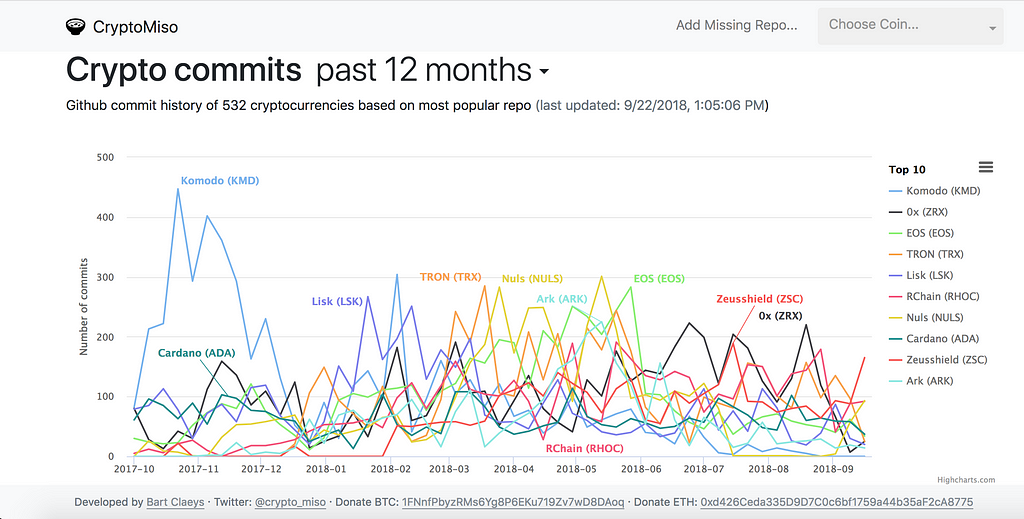
I strongly urge investors in the crypto space to begin thinking of crypto as a multi-year investment. It’s not enough to just say “HODL” or “To the moon” but also criticize and avoid the projects who spend heavily on marketing without backing up their words with technical development.
Especially during this crypto winter, it’s about time we really support the projects focused on technical development and still working when the market is down.
I am very bullish on crypto as a whole, and I am excited to see what use cases and developments we will see in 2018 and 2019, regardless of where token prices stand.
A whole new world is being developed, so let’s care about it a little more than just the price on CoinMarketCap.
The Dangers of Token Prices was originally published in Blockchain at Berkeley on Medium, where people are continuing the conversation by highlighting and responding to this story.
From: Blockchain at Berkeley – Medium
Source Description:
